
During COVID-19, marketing budgets are being cut across the board
Please select all of the areas in which you've seen cutbacks:
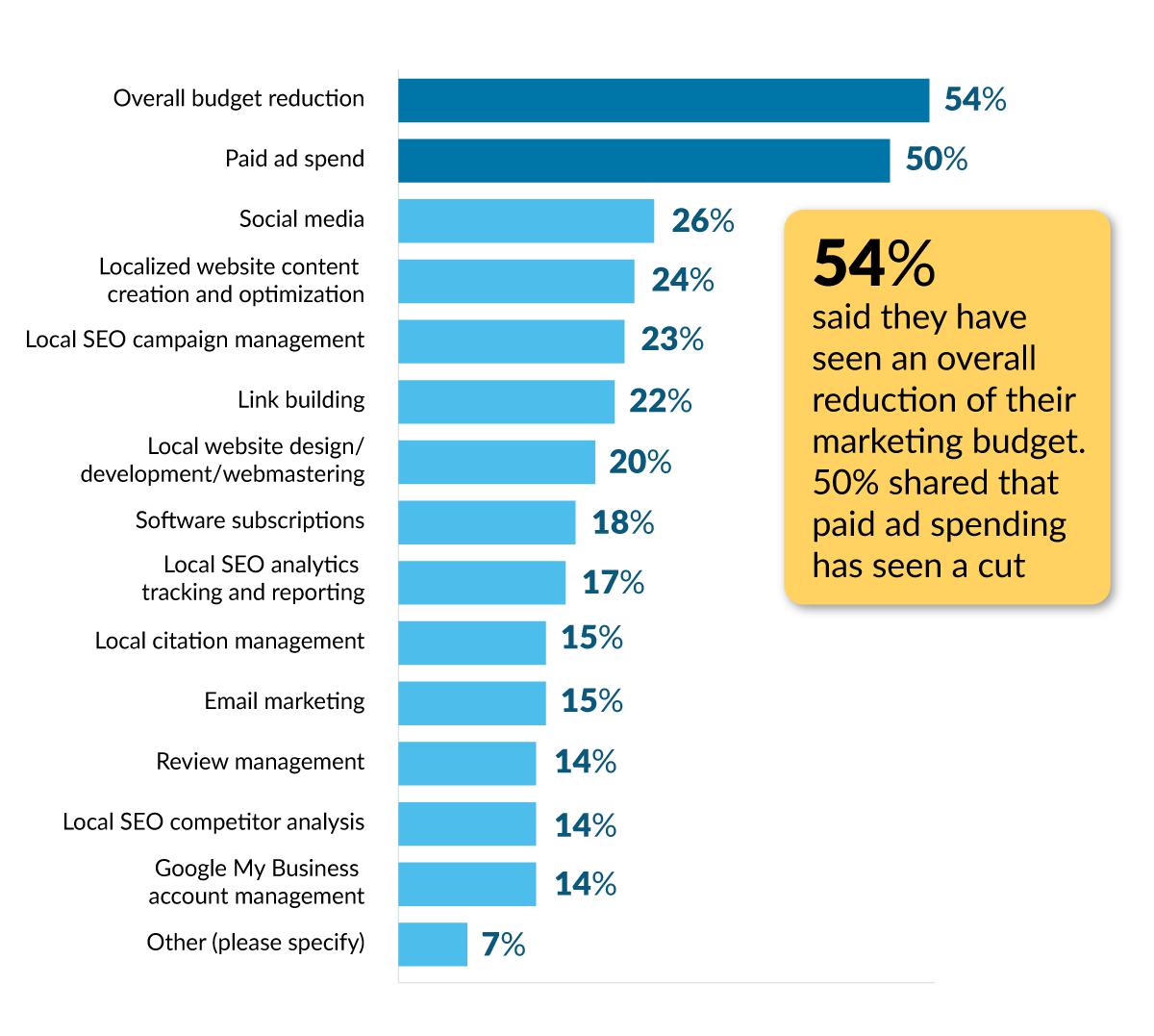
In addition to half of respondents
seeing paid advertising pauses,
tasks like improving local website
content, link building, and citation
management have all experienced
lesser but significant budgetary
restrictions.
It will be many months before a complete analysis can be done of how COVID-19 has impacted the search marketing industry, but it’s reasonable to predict that agencies with clients in non- essential categories will face greater challenges than those with strong client bases in verticals considered essential.
Tighter marketing belts call for a razor focus on proven tactics
Has your brand or clients' marketing or SEO budget been cut as a result of COVID-19?
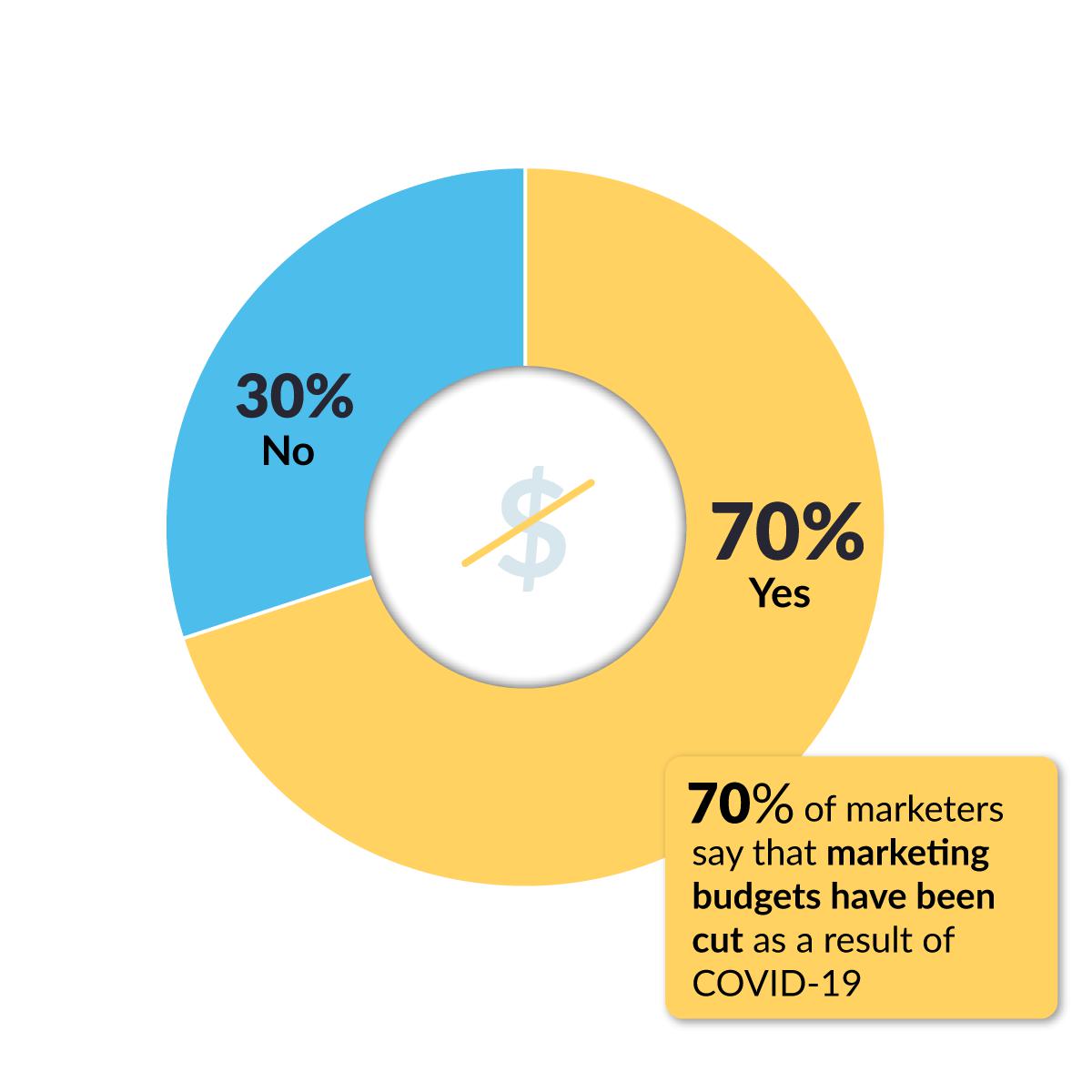
With both brands and agencies seeing significant cuts to marketing budgets, now is the time to sharpen your focus on proven strategies instead of experimental campaigns.
SEO, content development, and all forms of customer communication (social, email, messaging) are time-tested methods for being visible and accessible to the public just when it’s needed most. Focus on location data accuracy, website optimization, timely and informative content, and staff trained and available to solve consumer and client problems.
Marketing agencies are feeling budget cuts most in the pandemic era
Has your brand or clients’ marketing or SEO budget been cut as a result of COVID-19?
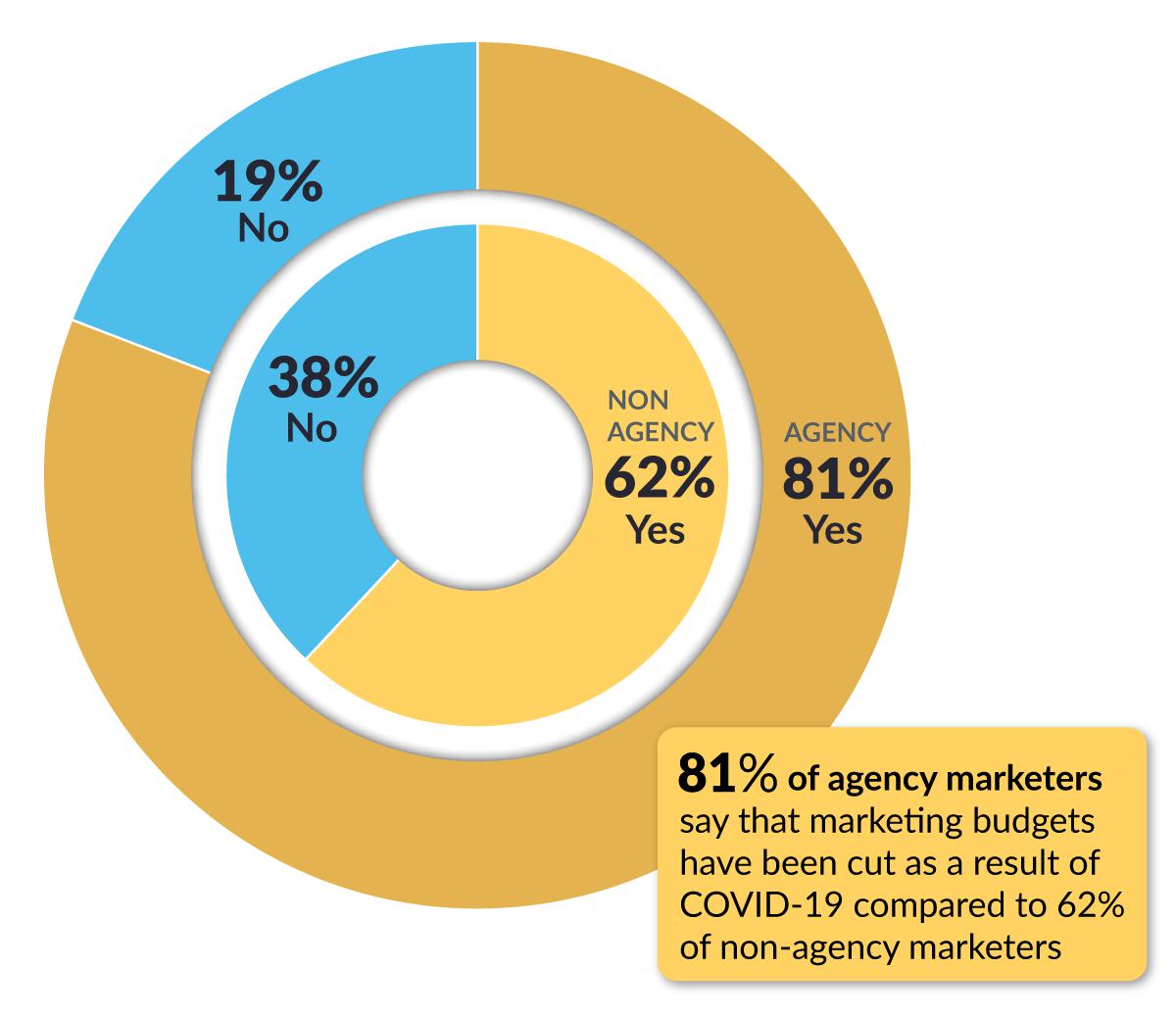
19% more marketing agency staff are experiencing the effects of budget cuts than their non-agency counterparts are.
Make an airtight case for how to re-allocate spending on the most proven SEO tactics while trimming back in other areas — you may be able to decrease loss of budget. With paid advertising investment down, try using case studies to prove how long-term funding for SEO, content development, and audience intelligence deliver results that could positively impact both retention of budget and clients.
Businesses have made rapid, agile moves to stay operational
Has your brand/client implemented new methods for getting products/services to customers that were not previously part of strategy? (For example: e-commerce, curbside pickup, delivery, or video conferencing)
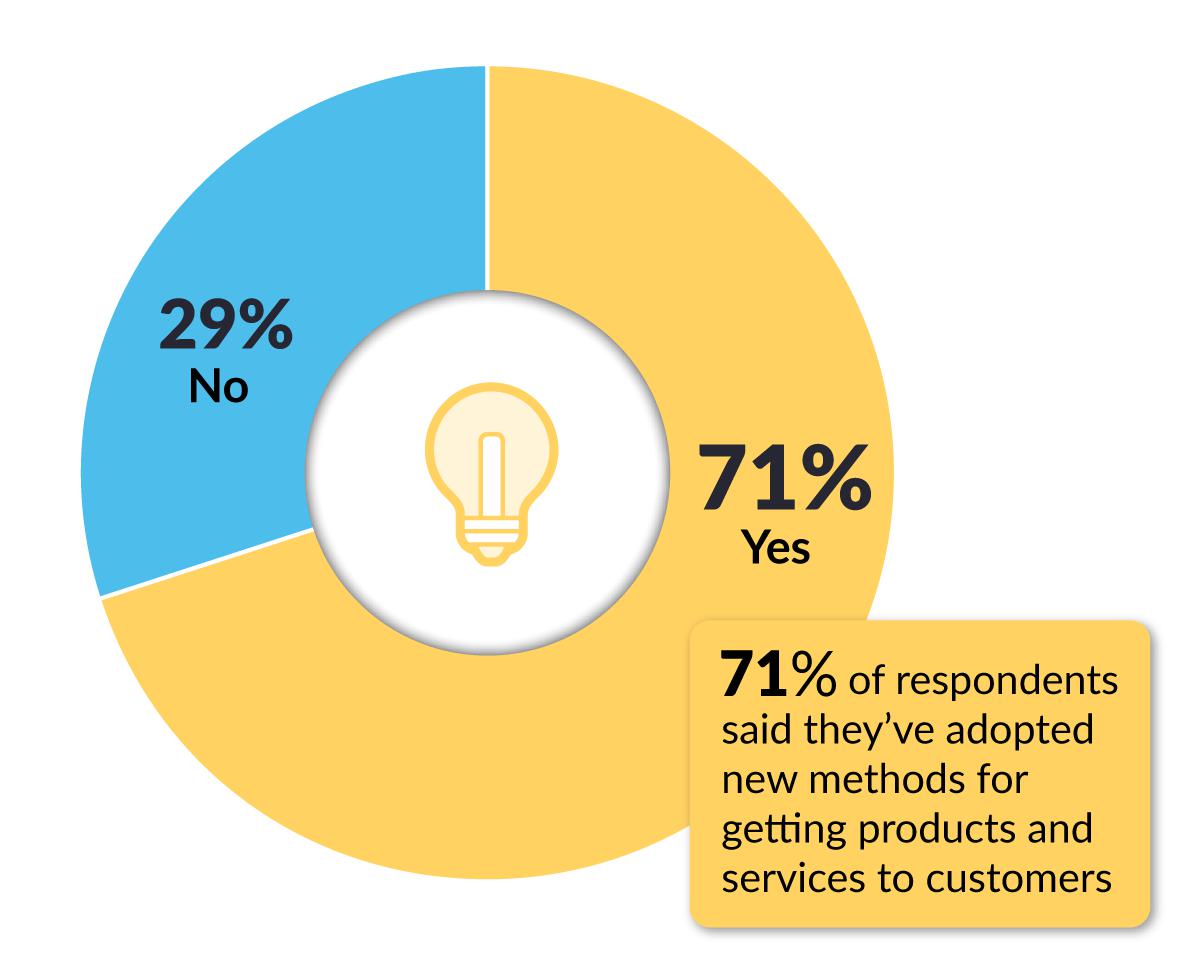
Hats off to the 71% of businesses that swiftly implemented e-commerce, curbside pickup, delivery, video conferencing, and other measures to keep communications and transactions moving during the public health emergency.
If there is good news to tell, it’s that the technology for these innovative solutions already existed prior to C-19, enabling quick transitions for many brands. Opportunity remains for the other 29% to catch up and serve customers in vital ways.
New strategies are here to stay for the majority of brands
Will these new methodologies be continued post-COVID-19?
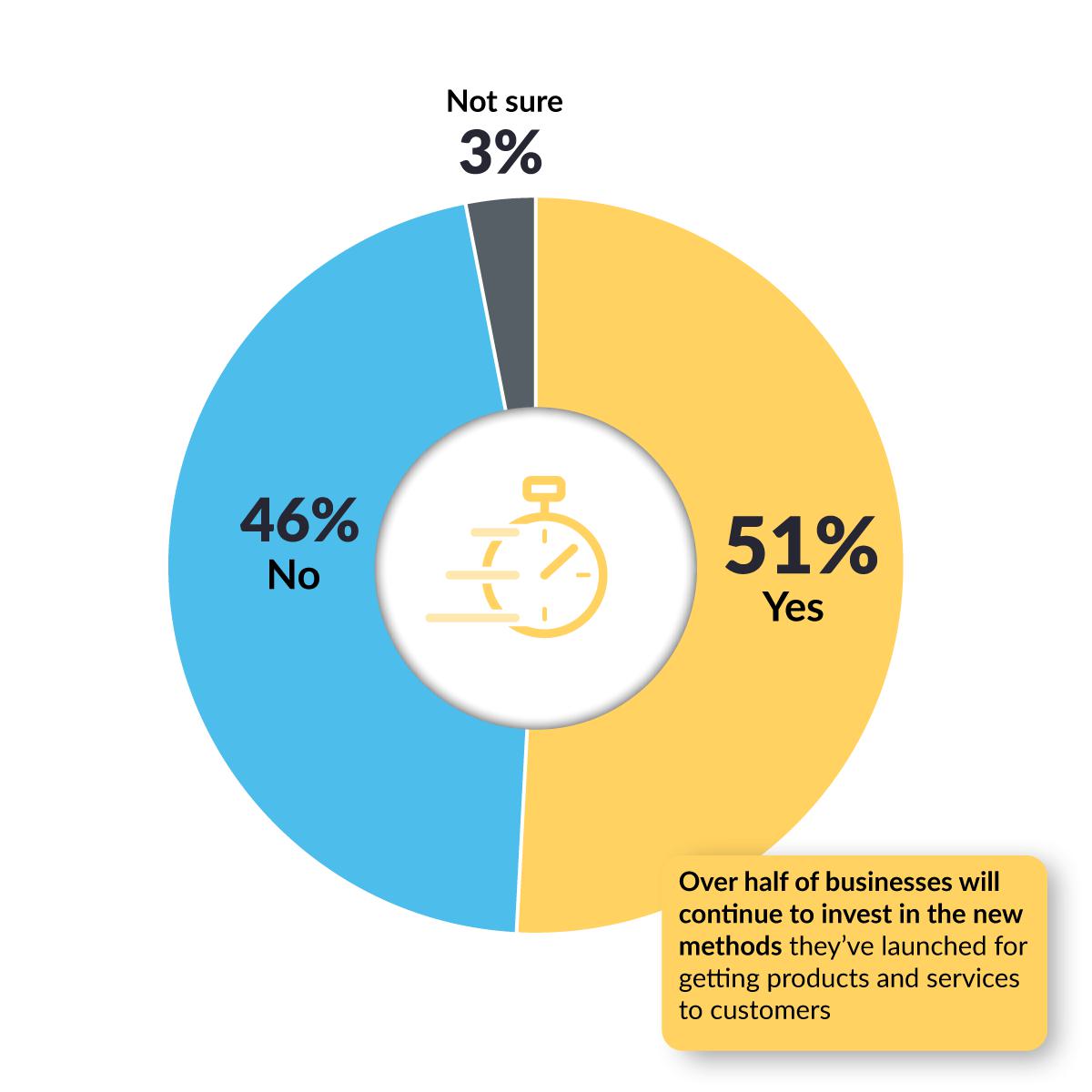
Direct-to-consumer, buy online, pickup in-store, and even curbside delivery predated COVID-19 on a small scale, but now necessity has driven nearly all brands to explore demand for convenient consumer experiences. Over half of business say they will continue to offer these expanded forms of customer service.
For some companies, this could pave the way for core operational changes, such as employing fewer in-store clerks and more in-house delivery staff, and some analysts are seeing opportunity for the rise of robotics.
Business-as-usual will return, but it will take time
The pandemic is currently significantly altering human behavior, from working remotely to impacting local foot traffic in favor of product delivery to sparking hoarding and supply chain issues. Which of the following statements best represents your predictions for the post-COVID local business scenario?
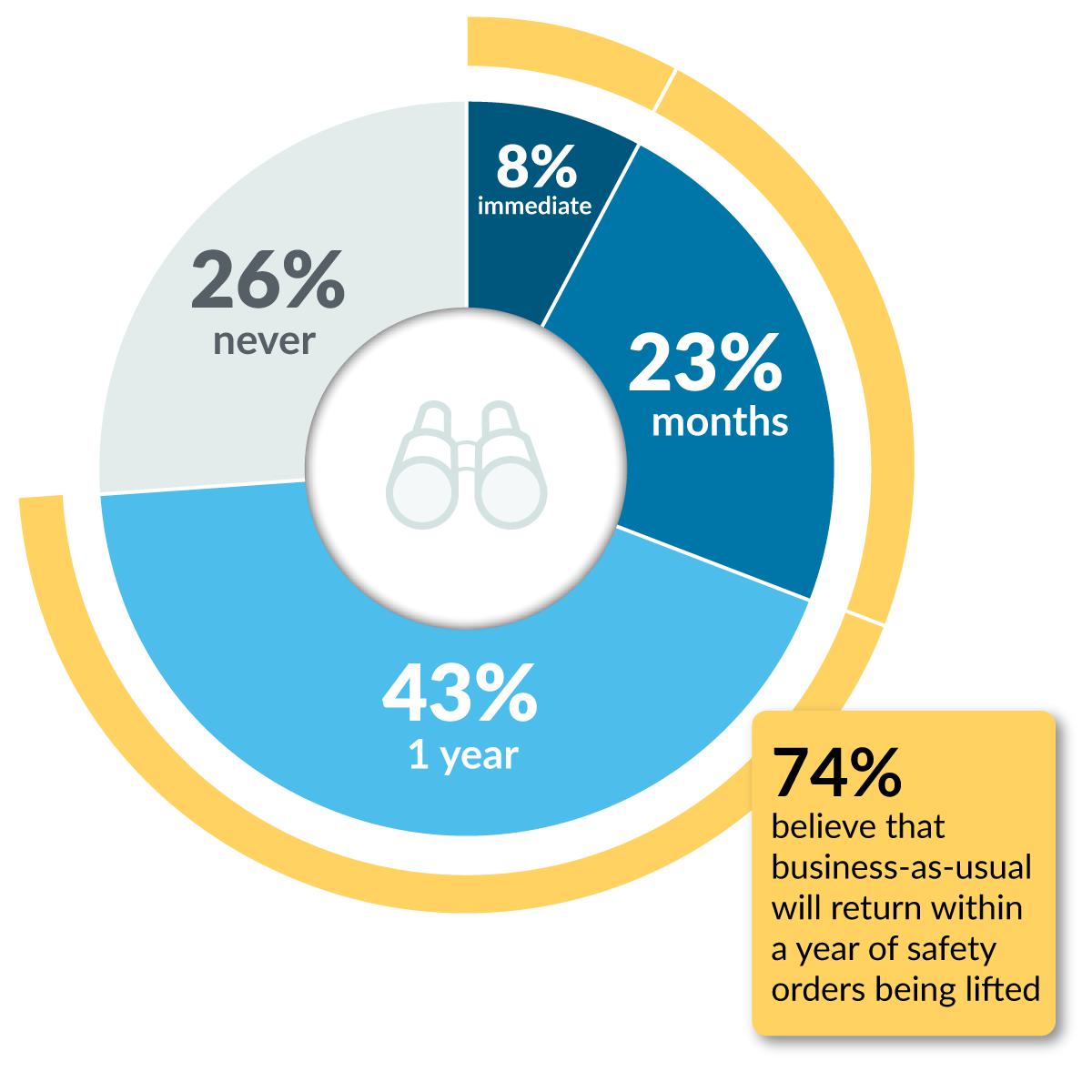
Both brands and marketers have hopeful takes on the future, largely agreeing that we’ll eventually return to a more normal state of operations. Signs of this could include less necessity for protective equipment and measures and a gradual uptick in foot traffic as a KPI.
In the meantime, do your utmost to implement and communicate the measures you’re taking to ensure that customers are safe and well-served. This clear communication is essential to your current operations.