
What is a SERP analysis?
Last Updated: October 2024
A SERP analysis is the process of examining the search engine results page (SERP) for a keyword to analyze the features, the power of your competitors, and the difficulty of the keyword.
You can take your competitor analysis to the next level by conducting a SERP analysis. You’ll better understand the landscape by looking at things like:
SERP features, like featured snippets and "People Also Ask" boxes
The link metrics of all ranking pages
Keyword Difficulty score
Google SERPs and user intent
Typically, it's not enough to understand the right keywords to target. If you want to win traffic, you need to understand search intent for your keyword.
This means getting inside the mind of the searcher to understand what they’re looking for. Sounds impossible, right? Fortunately, Google has done 99% of the work for you. You can start by simply Googling the keyword you want to target!
For example, here are the results for "kittens for adoption":
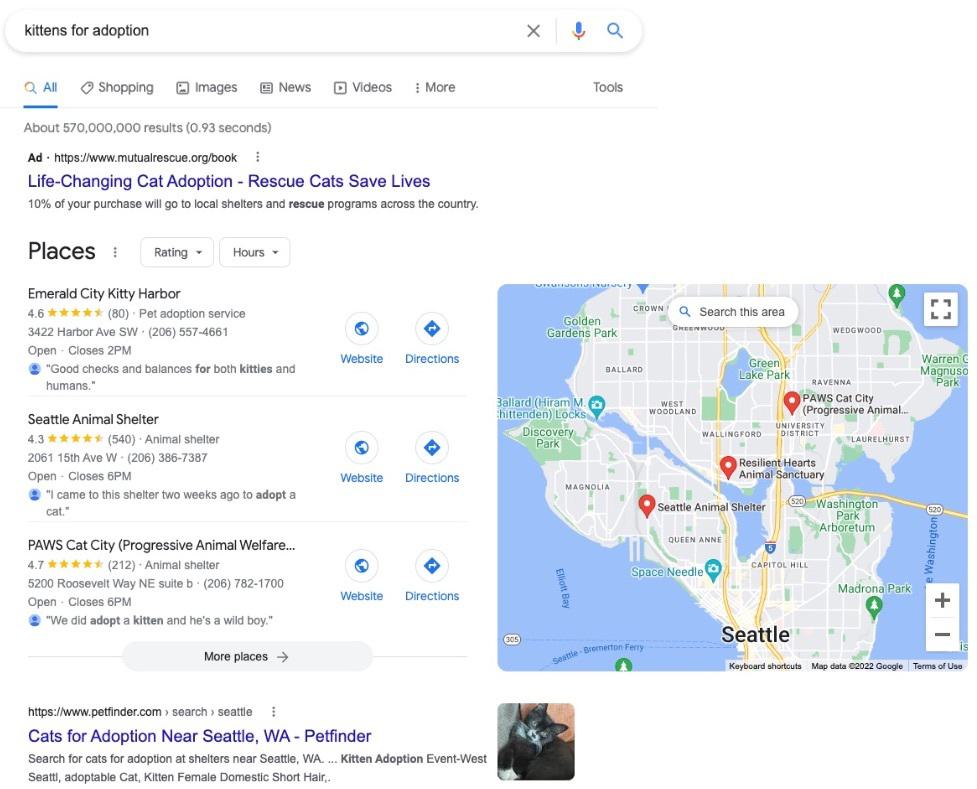
Here, we see a Google Ad for a rescue organization, a map pack result for local kitten shelters, and an adoption website. Clearly, Google believes the intent of this search is to find a kitten for adoption.
Let’s compare that to the results for “new kitten”:
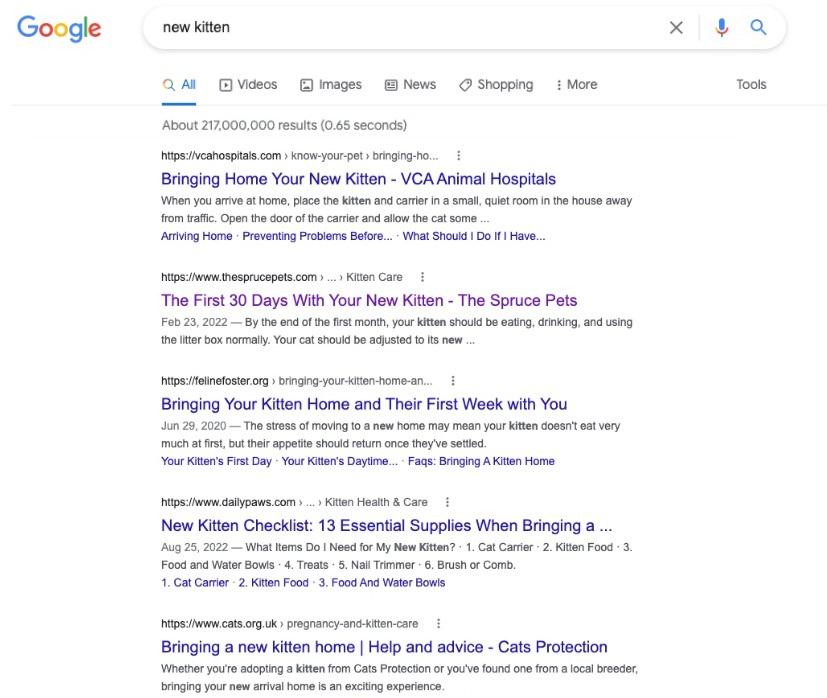
Although “new kitten” isn’t explicit, all of the results focus on information on how to care for a new kitten - we see checklists, help, advice, timelines, etc. Google is telling us that the intent of this search is to find information about what to do after bringing home a new kitten - lists of essential items, veterinary care, training, adjusting to your new responsibilities, etc. We don’t see results for kitten-related products, or local kitten rescue organizations. While “new kitten” and “kittens for adoption” might seem like closely related keywords (and they are!), the SERP results are very different.
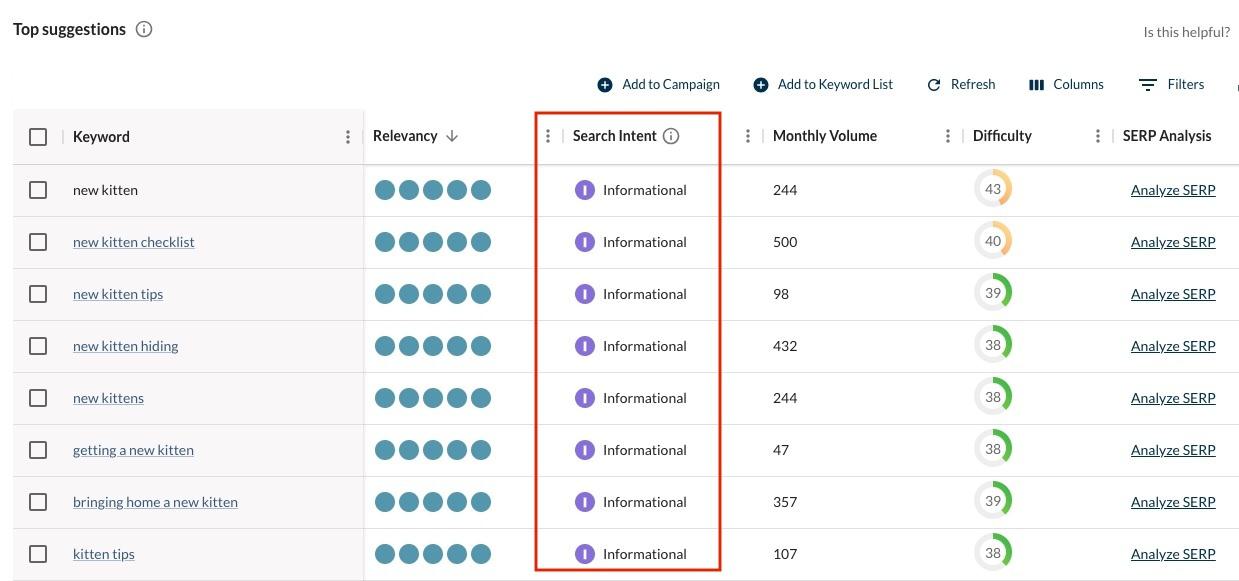
If you’re uncertain about the search intent of a keyword - or want to confirm your hunch - Moz is here to help! In Kewyord Explorer’s Keyword Suggestions (you can access this tool by creating a free community account here), you’ll find the Search Intent of the keyword you search, along with additional suggestions. As you can see in the example below, Google views the topic of a "new kitten" as Informational. This can help guide your content strategy:
Target the right intent, every time with Moz

Understanding & Fulfilling Search Intent - Whiteboard Friday
Understanding what and why your target audience is searching is more important than ever - but how do you effectively analyze and fulfill true search intent? In this Whiteboard Friday, Britney Muller shares everything you need to understand and fulfill search intent.
Beware of guessing!
Your true search rivals aren't who you think they are. Learn how to find (and outrank) them in our SEO Accelerator webinar. Zero fluff, all strategy.
How to conduct a SERP analysis
There are a couple of different ways to go about this, each revealing different data points.
First, download the MozBar for Chrome
Go to Google, and turn the MozBar on by clicking the browser extension
Search your target keyword
Browse the SERP to quickly see link metrics for all ranking results
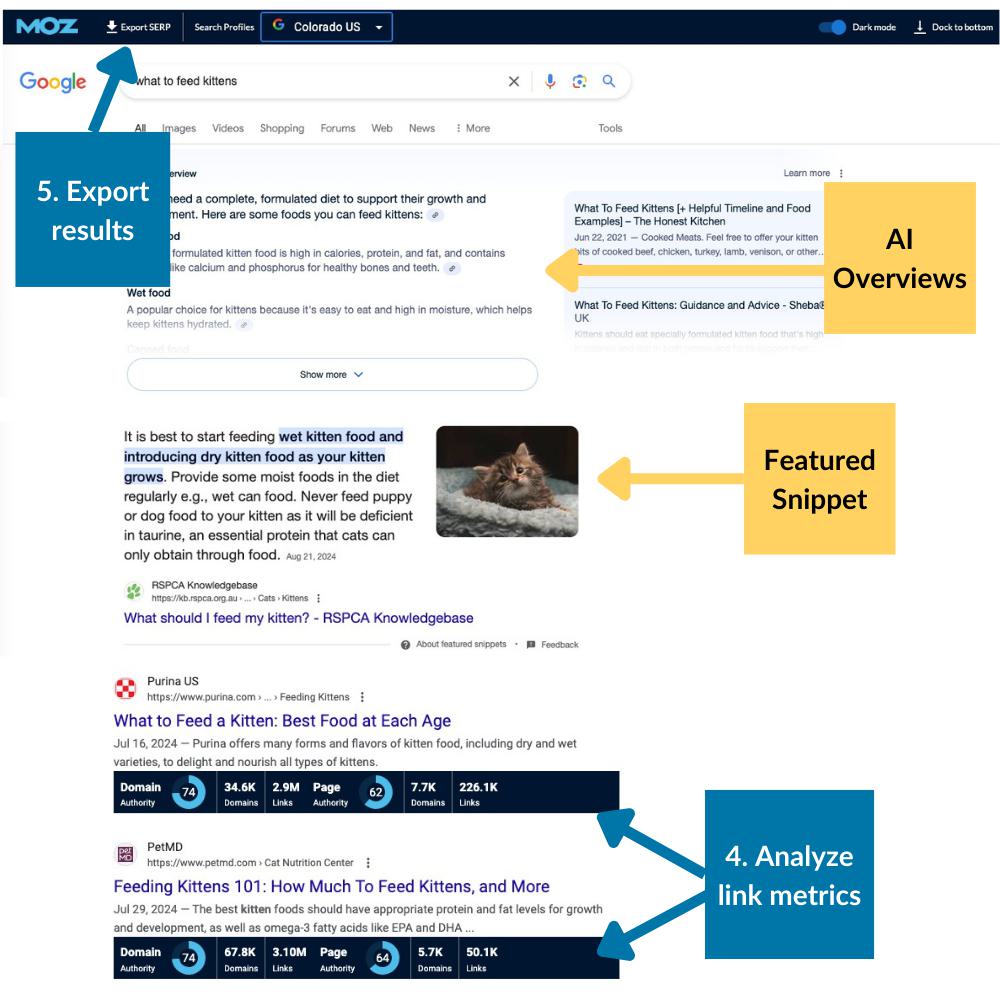
5. Better yet, export the results to a CSV by clicking the icon at the top of the page. The MozBar export allows you to investigate within a spreadsheet program. You can see an example of this report in the image below.
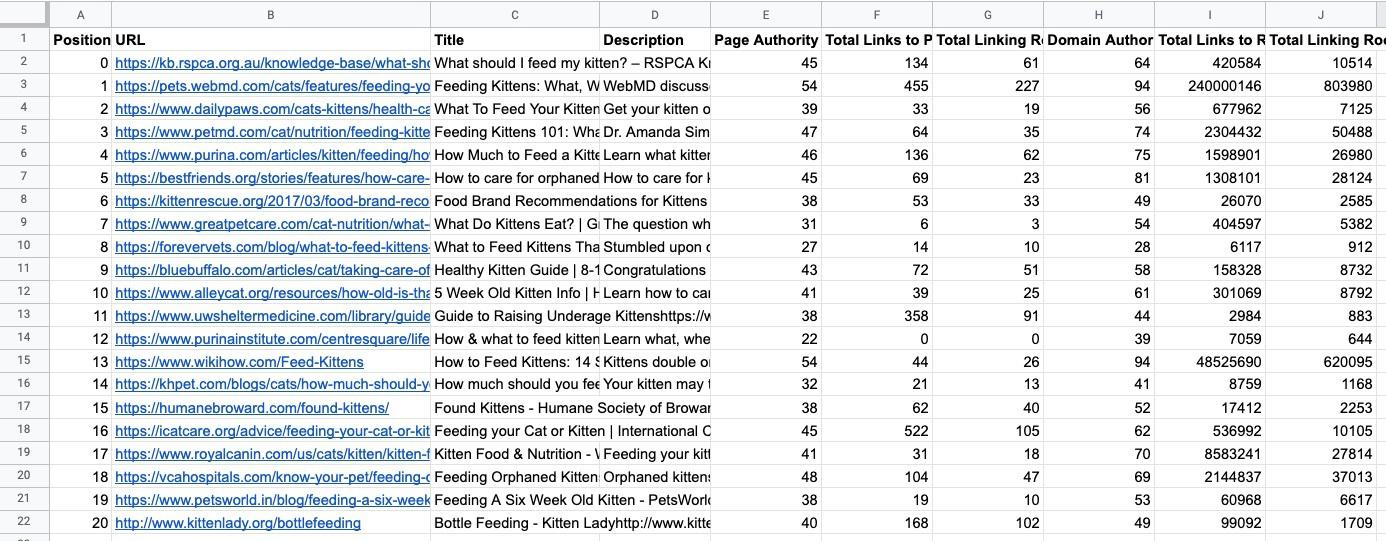
6. Final step: In the SEO Competitor Analysis Template, copy and paste the CSV to the SERP Analysis tab.
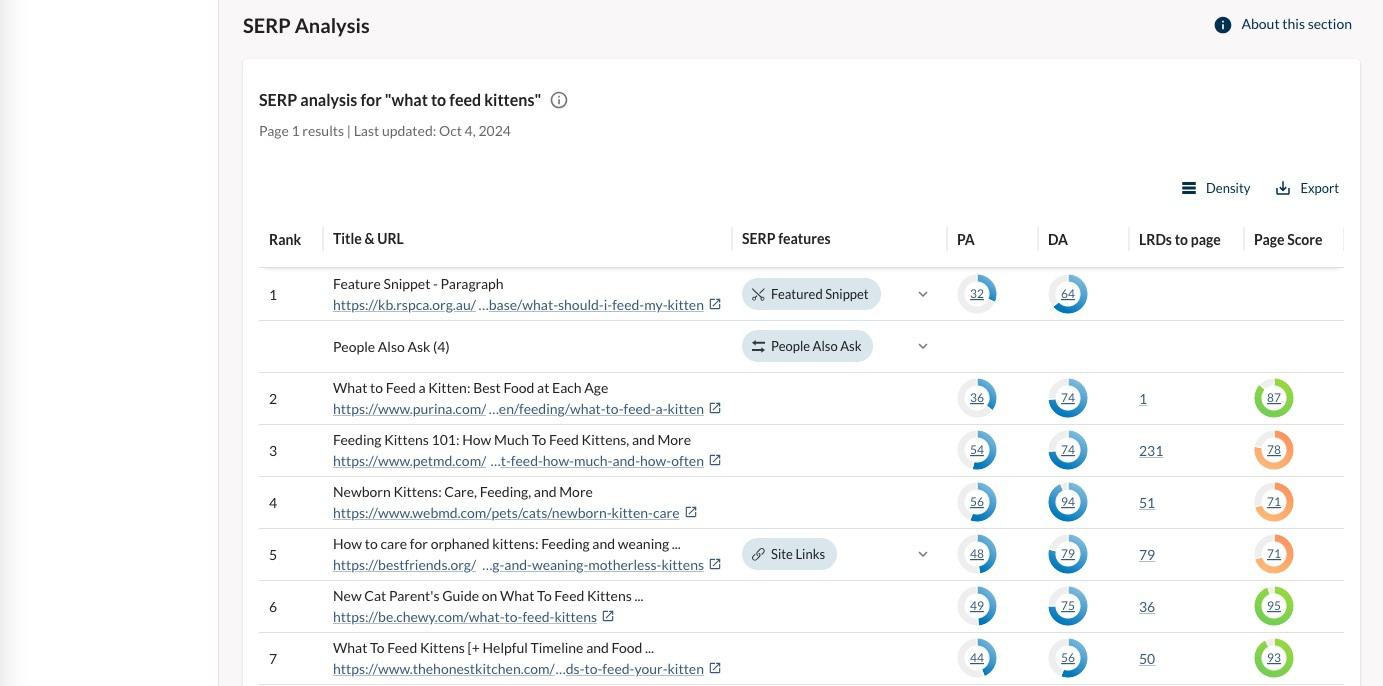
Finally, you can gather more intel on the keyword with the SERP Analysis report in Keyword Explorer. Enter your target keyword, and the SERP Analysis report will show you this:
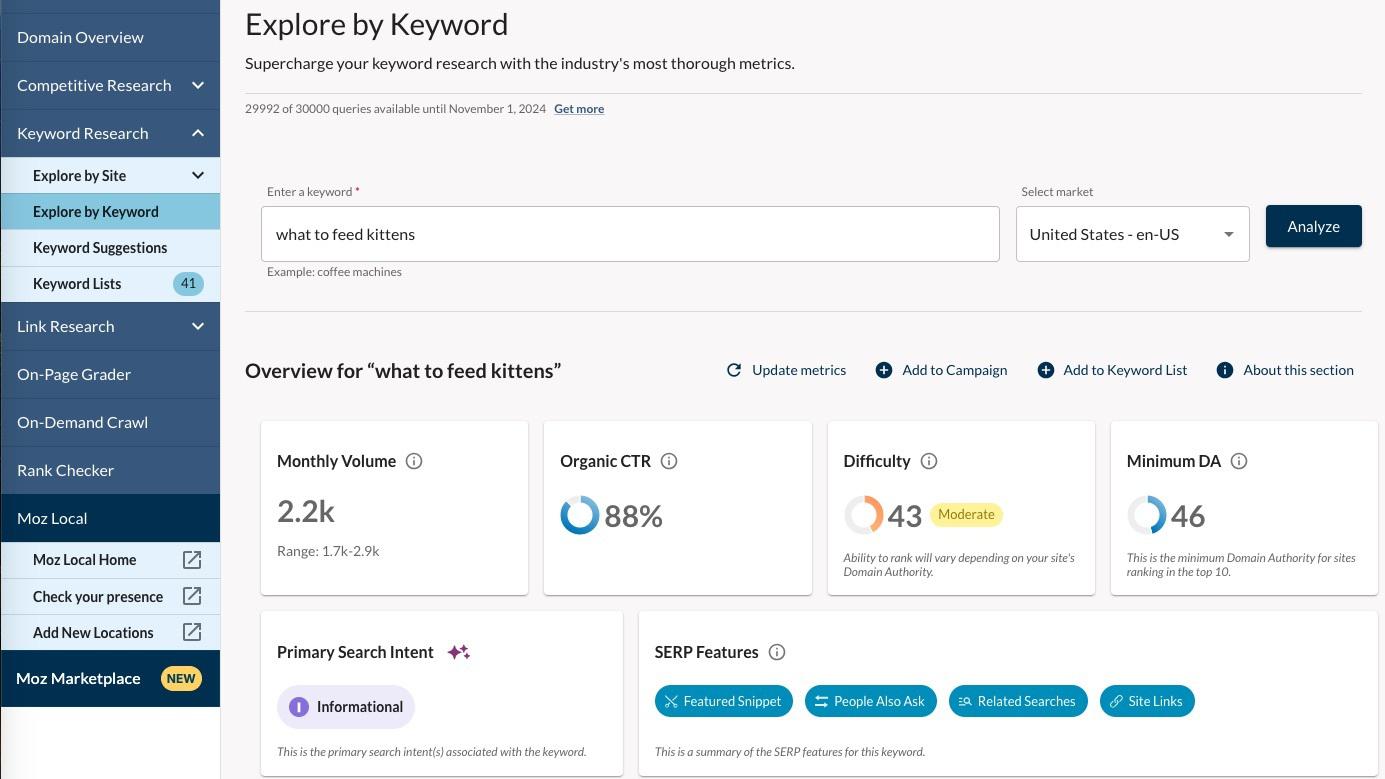
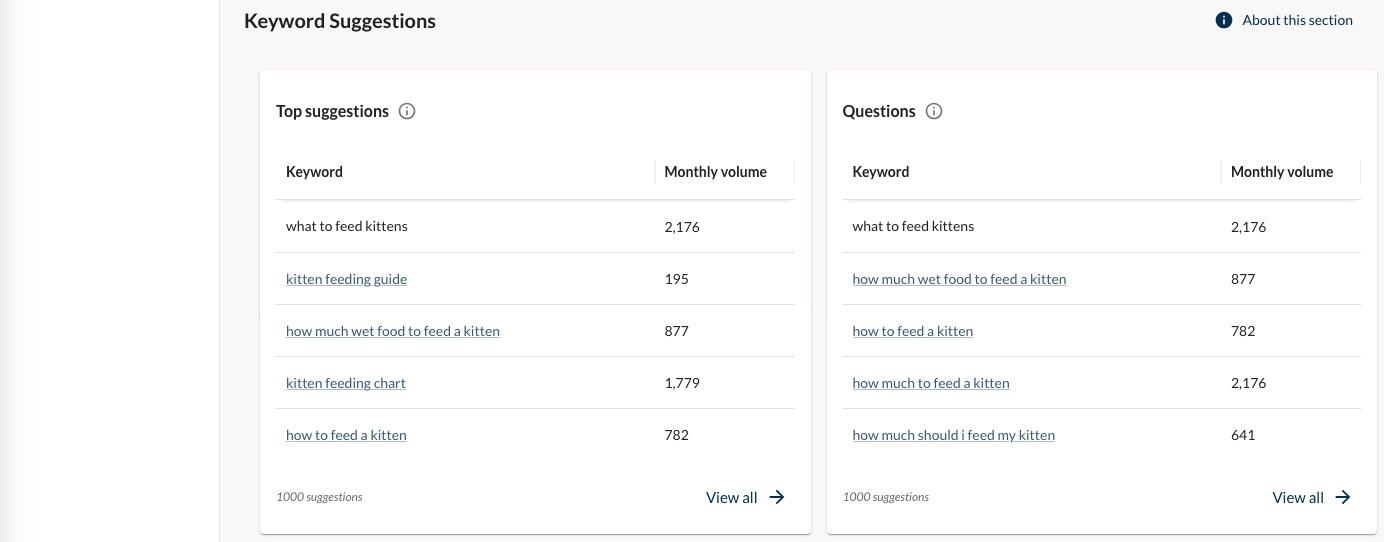
Keyword Monthly Volume: a highly accurate estimate of how many times per month people search your keyword within a specific region and search engine
Organic CTR: an estimate of the percentage of clicks that are available to traditional, organic links in the SERP for this keyword
Keyword Difficulty: a score from 1–100 that tells you how difficult it is to rank in the top 10 results for that keyword
How to gain insight from a SERP analysis
As I analyze these reports, I’m looking at a few things in order to gain some insight:
1. Determine search intent
What type of search is this, based on the top 10 results? Given that all 10 pages are educational articles on what to feed a new kitten that include advice, charts, lists, and more, I can conclude that the search intent is informational. This means that product pages or location landing pages are not likely to rank on the first page of Google for this keyword.
2. Look for the SERP Feature
Is there a SERP Feature present, and if so, what’s the format? In this case, there is a Featured Snippet in a list format. When I click into the URL that has captured the Snippet, I’m looking for the on-page attributes that have been implemented, such as an H2 tag and a bulleted list.
3. Examine page titles
What are the title tags for the top 10 results? In this example, I see a lot of questions that a potential customer may ask themselves: What should I feed my kitten? How Much to Feed a Kitten? What Do Kittens Eat? I can conclude that Google understands that a new kitten owner has a lot of questions, and the results will represent valuable resources that will help the user answer those questions, not sell them products or services.
4. Evaluate your competitor’s authority
The average Domain Authority® of the top 10 sites for this search is 63, which means it’s fairly difficult to rank on the first page of Google.
5. Analyze metrics
What do the metrics mean for me? In this example, the Volume is 1.7k - 2.9k, which is substantial, making it an appealing goal. But can I rank? The Difficulty score is a 42, which is medium difficulty and may be more of a long term goal. I may want to consider targeting a lower Difficulty keyword in the short term.
Having a firm understanding of the landscape you’re diving into is imperative before you start diving into content. This way, you’re not wasting your time and money jumping into an area in which you’re not (yet!) equipped to rank.
